How Reverse Osmosis Works Onboard
A marine RO system operates as a sequence of interconnected steps, where each stage directly impacts overall performance and reliability.
Seawater Intake and Pre-Treatment
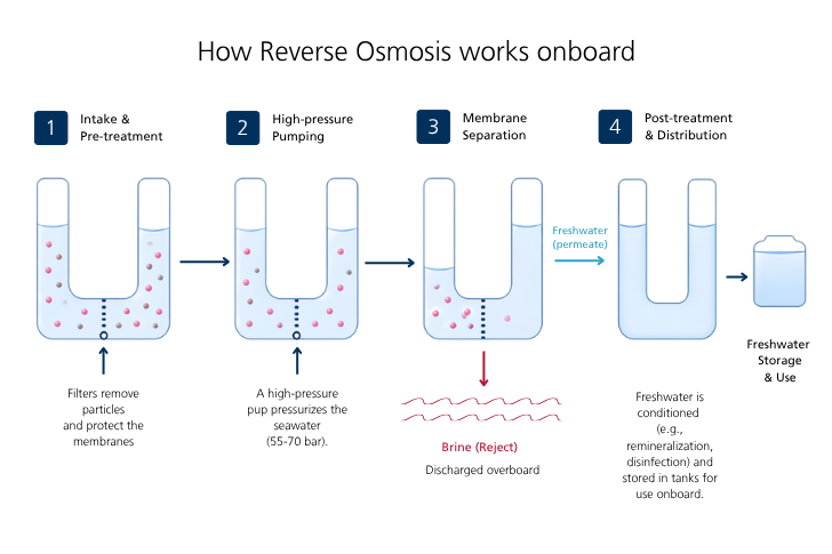
The process begins with seawater intake, followed by pre-treatment. This stage is essential for protecting the membranes from fouling and damage. Seawater first passes through coarse filters to remove larger particles, followed by finer filtration to capture smaller contaminants. In some systems, chemical dosing is applied to control scaling and biological growth.
From a technical perspective, pre-treatment is one of the most important factors influencing system lifespan. Inadequate filtration will quickly lead to membrane fouling, reduced output, and increased maintenance requirements.
High-Pressure Pumping
Once pre-treated, the seawater is pressurized using a high-pressure pump, typically in the range of 55 to 70 bar for seawater applications. This pressure must be stable and sufficient to overcome osmotic pressure and drive the separation process.
Any instability at this stage, such as pressure fluctuations or pump wear, will directly affect permeate production and overall efficiency. For onboard technicians, monitoring pump condition and pressure consistency is a key operational task.
Membrane Separation
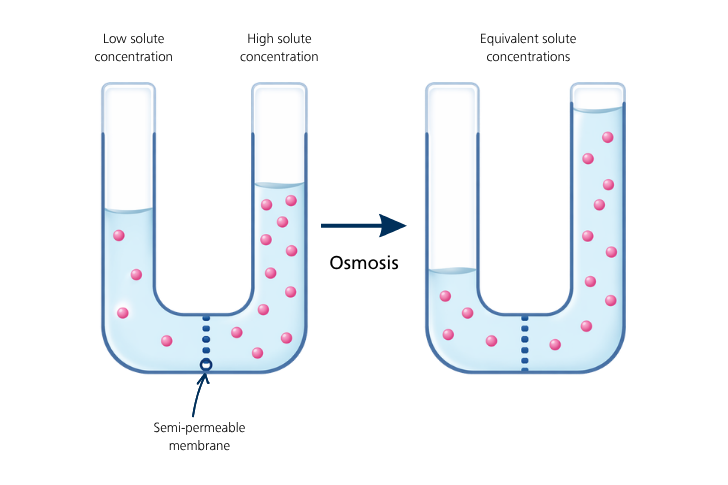
The pressurized seawater enters the membrane modules, where the actual separation takes place. The semi-permeable membrane allows water molecules to pass while rejecting salts, bacteria, and dissolved solids.
The output is divided into freshwater and a concentrated brine stream that is discharged overboard. Membrane performance is influenced by several factors, including feed water quality, operating pressure, and temperature. Over time, membranes will gradually lose efficiency and require cleaning or replacement.
Post-Treatment and Distribution
After separation, the produced freshwater is typically conditioned before use. This may include remineralization to improve taste and stability, as well as disinfection depending on vessel requirements. The water is then stored in freshwater tanks for distribution onboard.