The Insatech Bunker Management System prevents bunker fuel fraud through real-time mass flow monitoring. By measuring flow, density, and temperature with high accuracy, the system ensures full transparency and immediate detection of fuel manipulation during every bunker operation.
Key Advantages:
Real-time marine fuel mass verification
Accurate measurement of flow, density, and temperature
Immediate detection of short delivery and fuel manipulation
Verified bunker data for dispute handling
Protects margins and reduces fuel loss
We deliver directly and globally to end-users, agents, and resellers. Contact us at quotes@insatech.com.
Data-Driven Vessel Performance: The Insatech PMoS Advantage
Establishing a Valid Baseline with Real-Time Data Integrity
A valid baseline is the foundation for profitable performance optimisation and decision-making in the maritime industry. The Insatech PMoS accelerates this transition by providing real-time ship data that is far more accurate and tangible than outdated, manually gathered noon-reports or personal chief engineer experiences.
Since no performance system is better than its input data, the PMoS uses verified measurements gathered from multiple consumers and sensors. This ensures reliable data for both vessel crew and shore-based teams, providing real-time indications of the vessel’s immediate fuel efficiency and consumption amid ever-changing dynamics.
Technical Data Integration: Comprehensive Sensor Inputs
The Insatech Performance Monitoring System advances beyond a basic Fuel Consumption System (which relies primarily on flow meter data) by integrating a comprehensive suite of sensor inputs for holistic analysis. This breadth of data is crucial for calculating accurate Key Performance Indicators (KPIs).
Key Data Sources Integrated by the PMoS:
Propulsion: Torque, Shaft Speed, and power from generators.
Navigation (NMEA Signals): The system draws and logs existing NMEA signals, including GPS, anemometer, gyro, and echo sounder.
This comprehensive integration provides the necessary information for the crew to take immediate, informed action when sailing conditions or routes change, maximizing competitive advantage and added profit.
SEEMP Compliance and Continuous Improvement Tool
MARPOL Annex VI, Regulation 22 requires all ships to hold an International Energy Efficiency Certificate (IEEC) and maintain a Ship Energy Efficiency Management Plan (SEEMP) to continuously improve energy efficiency.
The Insatech PMoS is your integrated management tool to meet these obligations:
Continuous Data Logging: Automatically logs performance data required for regulatory reporting.
Baseline Establishment: Easily establish a valid performance baseline necessary for all SEEMP evaluation phases.
Administrative Relief: Provides an easy-to-use management interface that significantly minimizes theadministrative burden on board.
Goal Setting: Helps evaluate vessel performance against targets and provides quantifiable input for setting and tracking new SEEMP goals and initiatives.
How the Insatech Performance Monitoring System (PMoS) Works
1. Real-Time Data Acquisition and Crew Awareness
The Insatech Performance Monitoring System (PMoS) provides deep, immediate insight into your vessel’s operation. Its core function is to gather high-fidelity sensor signals, processing and displaying real-time performance data on the bridge, in the engine control room, and at headquarters for organizational benefit.
Use the PMoS to achieve continuous operational improvement by:
Increasing crew awareness and knowledge of efficiency.
Reducing fuel consumption and operational costs.
Identifying consumption trends over time.
Improving maintenance planning and scheduling.
2. Direct Measurement of Fuel Efficiency (SFOC)
The PMoS uses direct measurement principles for ultimate accuracy. By installing highly accurate mass flow meters (typically before and after the engine/generators), fuel consumption is monitored closely in real-time.
Direct Fuel Efficiency Calculation:
When consumption data is combined with measurements of actual speed and position (from the speed log and GPS signals), the system calculates the vessel's truefuel efficiency.
For the most detailed readings, the PMoS integrates comprehensive data from onboard sensors, enabling the calculation and visualization of advancedKey Performance Indicators (KPIs) for engine and hull performance.
3. Key Performance Indicators (KPIs) Calculated
The system transforms raw sensor data into essential operational metrics:
Performance Metric
Unit
Specific Fuel Oil Consumption (SFOC)
[g/kWh]
Fuel Consumption
[ton/hour]
Fuel Oil per Nautical Mile
[kg/Nm]
Shaft Power
[kW]
Torque
[kN]
Slip
[%]
Shaft Rotation
[rpm]
Speed
[Knots]
Weather Influences
4. Data Processing and Headquarters Integration
All measurements from the Performance Monitoring System are sent via Modbus signals to a central collecting and processing cabinet. Here, the performance data is calculated, logged, and displayed on an intuitive touch screen interface.
Secure Data Link Option:
A dedicated data link option facilitates seamless data transfer to headquarters.
This link utilizes two databases: one on board the ship and one at headquarters.
Data is sent at a chosen frequency. If the ship loses internet connection, data is automatically stored and transmitted once the connection is re-established, ensuring zero data loss.
5. Transforming Data into Operational Profit
Once this comprehensive and verified data is acquired and displayed, it becomes a powerful tool for strategic decision-making:
Operational Efficiency: Optimise vessel operational efficiency (e.g., by testing trim optimization tools).
SEEMP Implementation: Implement and continually maintain the requirements of yourShip Energy Efficiency Management Plan (SEEMP).
Voyage Analysis: Create distinct KPIs and performance reports for each voyage.
Fleet Strategy: Evaluate the impact of new improvement projects before a fleet-wide roll-out.
Maintenance: Monitor the ship’s consumption trend over time to improve and prioritize yourmaintenance planning.
Crew Empowerment: Provide the crew with direct data insight to increase awareness and continuously improve knowledge of operational performance.
DataLink is an optional feature that automatically transfers the data collected on board to your own or a third-party database. This happens whenever an internet connection is established, and data validation ensures that no data is lost in the process. If no connection is available, the vessels database will just save the data locally, until the connection is reestablished.
Our systems collect a minimum of data which can be transferred on even the most challenging satellite internet connection furthermore DataLink checks the shore database for the latest data available and only transfers the new data further minimizing the amount of data that needs to be transferred.
Operation: Automation and Real-Time Operational Feedback
Automation Drives Data Quality and Efficiency
The Insatech Performance Monitoring System (PMoS) is designed for fully automated operation, requiring minimal attention after the initial setup. By drawing all signals from instruments to a central control cabinet, the system frees up valuable crew time for improving the vessel’s operational status rather than reading manuals or operating equipment.
The PMoS automation significantly improves both data quality and quantity. Instead of relying on manual readings and single daily noon reports, the system provides high-frequency data - often once per minute - ensuring better data integrity for analysis.
Immediate Insights with Real-Time KPIs
In the central processing station, raw data is instantly calculated into essentialKey Performance Indicators (KPIs), such as Specific Fuel Oil Consumption (SFOC) and kg of fuel per nautical mile (kg/Nm).
The advantages of this real-time feedback are clear:
Crew Insight: Provides the crew with immediate insight into the ship’s current performance, helping them sail the vessel more efficiently.
Education: The real-time data can be used instantly to educate the crew on how to achieve optimal operational efficiency.
Determining Weather Influence
The system’s advanced capabilities allow you to determine and factor in the influence of weather on ship performance.
With the optional motion sensor installed, you can analyze the effects of external factors. By manually inputting the state of the weather (wind and waves) for a limited period after installation, the gathered data can then be used to accurately calculate the ship’s true performance under varying weather conditions, leading to better optimization models.
Powerful Onboard Decision-Making Tool
The PMoS acts as a powerful, immediate decision-making tool for the crew. Since the information is available centrally and updated constantly:
Immediate Consequences: The crew can view the immediate consequences of any actions taken (e.g., trim changes, course adjustments) and how they affect the vessel’s overall performance.
Performance Monitoring: KPI changes serve as the main indicators of performance, immediately signaling when any change in conditions or operation affects efficiency.
Troubleshooting: Running conditions of monitored vessel components can be checked right away. Troubleshooting and corrective actions are identified much easier compared to manual visual inspections, potentially leading to immediate savings in fuel and crew resources.
The operator interface is designed to be easy to use. The main screen will immediately show the relevant information regarding current vessel performance such as consumption of the main engine, consumption per nautical mile, propeller slip etc. The user will also be able to see the development over time via the chart.
Engine performance
The Engine performance screen shows information about the specific fuel oil consumption of the main engines as well as shaft power in kW and %. The data is logged and shown in the chart below in order to give a historical insight into the engine performance.
Torque meter
In Details you can see an overview of the torque meter data such as power in kW, total power in MWh, RPM, total revolutions as well as torque in kNm. All the data are plotted on a chart in order to show the development over time.
Detailed fuel overview
In Details you will also find the Detailed fuel overview which shows the daily, actual and total consumption of each consumer, for example Main Engine(s), Auxiliary Engines and Boilers. Furthermore the view also shows the raw values from the flow meters such as mass flow, volume flow, density and temperature for both inlet and outlet.
Service parameters
The Service parameters displays raw data for each flow meter related to consumers. It shows the main menu data and provides the possibility for a manual totalizer. From here the alarm status screens are set up.
Installation setups
1-meter setup
The simplest way of measuring fuel consumption is by installing a single flow meter, which measures the fuel transferred from the fuel tank to the settling tank. The level of fuel in the settling tank is typically maintained by level sensors, and therefore the flow to the settling tank is equal to what is consumed.
3-meter setup
If more detailed monitoring is desired, then a 3-meter setup can be introduced. With the 3-meter system, the total fuel consumption is monitored by flow from fuel tank to settling tank. A set of flow meters, installed on the common auxiliary fuel supply line and return line, will provide the total consumption measurement of the auxiliary engines. By subtraction, the main engine fuel consumption can be calculated. By splitting the main engine and the auxiliary engines, the crew on board as well as on shore has a much more detailed overview of how the consumers perform.
Full consumer insight
To gain full understanding of the fuel consumption, you measure on each consumer inlet and outlet. This will provide a complete insight into each consumer’s fuel consumption, and any deviations from performance expectations or norms, can easily be pinpointed. This can potentially aid in preventative maintenance planning and better utilisation of auxiliary engines.
Your own setup
Insatech Marine is not restricted regarding installations. Therefore if you have your own specific setup that you would prefer, we can accommodate a corresponding setup or install the system on existing flow meters. In such cases we will typically include an engine pre-inspection to ensure technical feasibility of the setup.
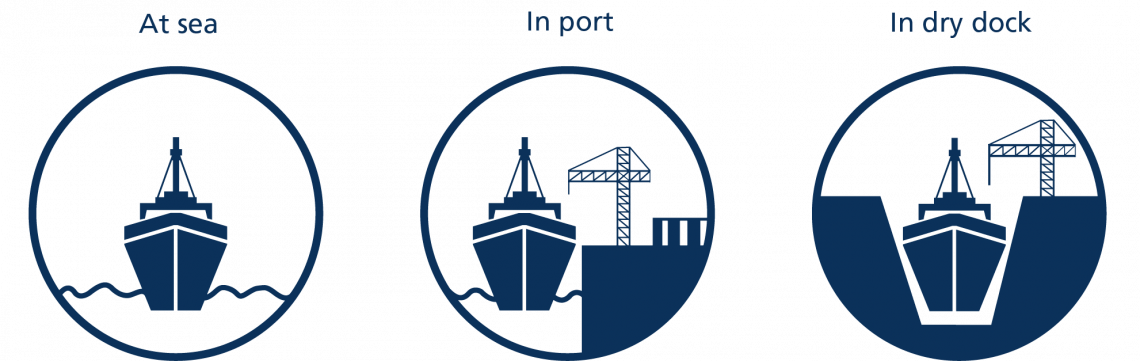
Insatech Marine provides you with turnkey solutions The system installation does not generate unnecessary costs, it will not alter your schedule or put your vessel out of service. Our experienced technicians install and commission the system while your vessel is in service, whether at sea, in port or dry dock. We are ready to move out at your preferred destination and time.
Do It Yourself - or let us install
The system is programmed, calibrated and has been initially setup by our technicians to minimize installation time onboard. The crew on board will in some cases be able to install the equipment under the guidance of Insatech Marine’s technicians, to ensure correct placement and electrical installation. This minimizes cost and required man-hours, while ensuring maximum benefit of the system during use. However, we are also able to provide installation with commissioning, tests and training of the crew. We can complete the installation at sea, in port or dry dock at your preference.
Turnkey solutions and installations; at sea, in port or dry dock at your preference.
If you require a service agreement as part of the system our skilled technicians are ready to service your vessel at all times. While the system requires minimal maintenance an occasional calibration of equipment is recommended.
Service and support is readily accessible
To constantly get highly accurate measurements, your marine equipment must function optimally. This means it must be calibrated according to the purpose, and therefore we provide service options, should the need arise. This is why we have our own technicians ready for service on board your vessel at all times, whether it is a planned service visit or a pressing and acute matter that needs immediate attention.
Minimal Maintenance
As the equipment used for the Bunker Management System is mostly constituted by components without moving parts, the need for active maintenance is minimal. Nonetheless there might be equipment in need of calibration or service from time to time, and depending on the specific setup, a service and maintenance plan will be issued with each individual Bunker Management System.
Insatech Marine offers a broad variety of system setups all depending on which requirements you need. If you any questions you are always welcome to contact our expert(s) for more information.
Want to know more about the Insatech Performance Monitoring System?
Discover how we helped DFDS justify their optimization investments!
In an optimization project regarding DFDS’ propulsion system, we were selected as a supplier of our Performance Monitoring System consisting of Coriolis flow and torque meters. Our prior experience with a similar project for another shipping line contributed to DFDS’ selection of us as their partner.
What is the primary purpose of the Insatech Performance Monitoring System (PMoS)?
PMoS provides the essential framework for data-driven decision-making by delivering accurate, verified fuel consumption data and KPIs like SFOC. This transforms crew awareness into actionable insights.
What are the main benefits of using the PMoS?
It secures added profit, maximizes return on investment, and ensures MARPOL SEEMP compliance. It also helps reduce fuel costs, analyze consumption trends, and improve maintenance planning.
How does the PMoS ensure better data quality than manual logging?
The system is fully automated, providing high-frequency data -often once per minute - instead of single daily noon reports. This automation ensures better data integrity and quantity for accurate analysis.
What is a "valid baseline" and why is it important?
A valid baseline is the foundation for profitable performance optimisation. The PMoS helps establish this by using verified, real-time data instead of manually gathered data or personal chief engineer experience.
Data Integration & Key Performance Indicators
What kind of sensor inputs does the PMoS integrate?
The PMoS integrates comprehensive data from propulsion (Torque, Shaft Speed, generator power) and navigation (NMEA signals like GPS, anemometer, gyro), advancing beyond basic fuel flow.
What are the main KPIs calculated by the PMoS?
Essential metrics calculated include: Specific Fuel Oil Consumption (SFOC) [g/kWh], Fuel Oil per Nautical Mile [kg/Nm], Shaft Power [kW], Torque [kN], and Propeller Slip [%].
How does the PMoS measure fuel efficiency directly
It uses high-accuracy mass flow meters (pre/post engine) to track consumption. This data is combined with actual speed and position (speed log/GPS) to calculate the vessel's true fuel efficiency.
Can the PMoS determine the influence of weather?
Yes. With the optional motion sensor, weather effects are determined by logging and analyzing external factors. This helps calculate true performance under varying weather conditions for better optimization.
Compliance & Data Transfer
How does the PMoS support SEEMP compliance?
It is an integrated tool for MARPOL Annex VI compliance. It automatically logs data, establishes a baseline, minimizes administrative burden, and provides input for tracking new SEEMP goals.
What is the DataLink option and how does it work?
DataLink automatically transfers data between the ship and shore databases. Data is stored locally if the connection is lost and transmitted once re-established, ensuring zero data loss with high frequency.
Installation & Service
What are the available setup options for the PMoS installation?
Options range from a basic 1-Meter Setup to a detailed Full Consumer Insight (inlet/outlet on each consumer). We also accommodate your own specific setup or use existing flow meters.
What does Insatech Marine provide in terms of installation?
We provide turnkey solutions installed by experienced technicians. Installation can be completed while your vessel is in service (at sea, port, or dry dock) to avoid altering your schedule or downtime.
What kind of service and maintenance is required for the PMoS?
The system requires minimal maintenance as components mostly lack moving parts. Occasional equipment calibration is recommended. Our technicians are readily available for planned visits or acute, pressing matters.
We Deliver Directly to End Customers, Resellers, and Agents – Globally
At Insatech, we are proud to offer our high-quality products to all customers worldwide. Whether you’re an end customer, a reseller, or an agent, you can purchase directly from us.
By choosing us, you gain direct access to all our products, eliminating the need for intermediaries. Our global distribution possibilities ensure fast and reliable delivery to your doorstep, wherever you are.
We strive to make it easy for you as an end consumer to find the products you are looking for while supporting agents and resellers looking to grow their business. Whether you’re buying for your use or resale, we’re here to meet your needs.
Discover how simple it is to work directly with a trusted global distributor – shop with confidence at Insatech today!