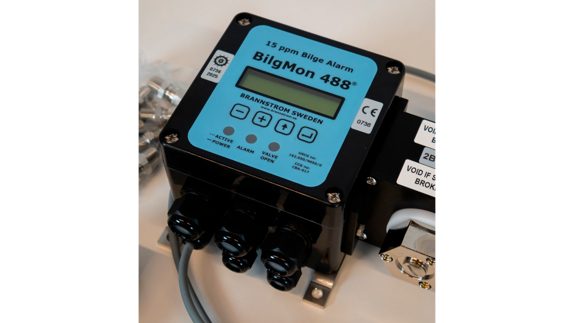
Rules and Regulations for the 15 ppm Bilge Alarms
According to MARPOL Annex I, ships of 400 gross tonnage and above must be fitted with a bilge water separator, and on ships of 10.000 gross tonnage and above the bilge water separator must additionally be fitted with a 15 ppm bilge alarm.
However, ships between 400 and 10.000 gross tonnage are also required to have the 15ppm alarm in order to be allowed to operate the bilge water separator, when the ship is in one of the following "Special Areas" as defined by MARPOL:
- The Mediterranean Sea
- The Black Sea
- The Baltic Sea and the North West European waters
- The Red Sea and the Gulf of Aden
- The Arabian Gulf
- The Oman area of the Arabian Sea.
For details see Reg.14 & 15 of MARPOL Annex I (Consolidated Edition 2006).
Compliance with IMO MEPC.107(49) Regulations
Ships built before 2005 may operate with equipment meeting the requirements of older IMO Rules, but ships built in 2005 and later must be fitted with bilge separators and 15ppm bilge alarms type approved According to MEPC.107(49).
For details see paragraph 1.3 of MEPC.107(49).
AMSA PSC procedure
AMSA’s (Australian Maritime Safety Authority) Port State Control Officers (PSCOs) inspect oily-water separators, filtering equipment, and alarms per Resolution A.1185(33). Testing ensures that effluent samples flow correctly to the 15ppm bilge alarm and that the automatic stopping device activates when oil content exceeds 15ppm. Failure to meet MEPC.107(49) can result in non-compliance and vessel detention.
Do you want to learn more? Read more here.